
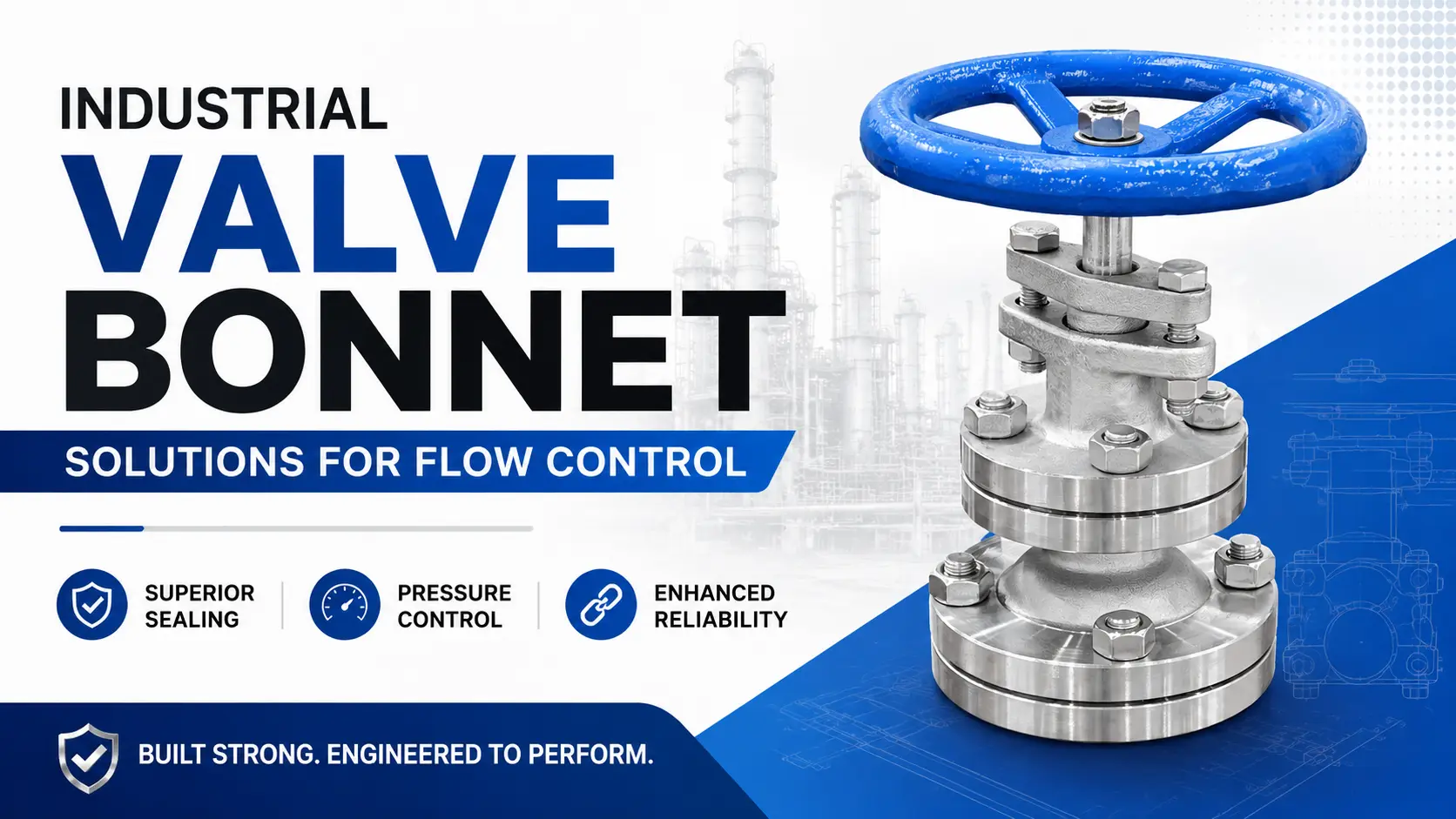
Industrial Valve Bonnet Solutions for Reliable Flow Control
Nobody talks about the valve bonnet until something goes wrong. A leak under pressure. A seal that failed six months into a new installation. A shutdown that cost more than the entire valve assembly was worth. And every time, the investigation leads back to the same place — the bonnet wasn’t right for the job.
That’s the reality of how these components get treated. They’re specified late, sourced on price, and forgotten until they cause a problem. But a valve bonnet does something genuinely critical in any industrial valve system — it seals the valve body, protects the internal mechanism, and contains pressure that, in the wrong conditions, can be catastrophic.
This guide covers the different bonnet types — including ball valve bonnet and check valve bonnet configurations — what each one does, which industries rely on them most, and what to look for in a manufacturer before you commit.
Ball Valve Bonnet Systems for Industrial Flow Applications
A ball valve bonnet does more than just close off the valve body. It maintains the seal integrity of the entire assembly under pressure cycling, temperature shifts, and the mechanical stress that comes with frequent operation. Get the bonnet design wrong, and even a well-manufactured ball valve leaks.
In high-cycle industrial applications — where a ball valve might open and close thousands of times over its service life — the ball valve bonnet takes continuous mechanical load. The sealing interface between the bonnet and valve body needs to stay tight across that entire lifecycle, not just at first installation. That requires precise machining, correct gasket selection, and the right bolting arrangement.
A valve bonnet used in ball valve systems is typically either threaded, bolted, or welded depending on the pressure class and application. Bolted valve bonnet components are the most common in industrial environments because they allow maintenance access without replacing the whole assembly. In high-pressure systems where zero leakage is the standard, pressure seal bonnet designs are often the better specification.
What Is a Valve Bonnet and Why Is It Important
Simply put, a valve bonnet is the cover assembly that closes the opening in a valve body through which the internal trim — stem, disc, gate, or ball — is installed and accessed. It creates a sealed chamber that contains the process fluid, prevents leakage to atmosphere, and protects the operating mechanism inside.
But “cover assembly” makes it sound passive. It isn’t.
In high-pressure systems, the valve bonnet is under constant mechanical stress. It’s holding back the process fluid every second the valve is in service. In steam systems, it’s handling thermal expansion cycles that can fatigue poorly designed bonnets over time. In chemical processing, it’s the last line of defence against a fluid you really don’t want escaping.
The design and material of an industrial valve bonnet need to match the application exactly. Wall thickness, flange geometry, stem seal configuration, and bolting pattern — all of these are engineering decisions, not catalogue selections. A valve bonnet that’s right for a water treatment application at 10 bar is a completely different component from one specified for a refinery service at 150 bar.
Different Types of Valve Bonnet Used in Industries
Not all bonnets are built the same — and choosing the wrong type for the application is one of the most common sourcing mistakes in industrial valve procurement.
Ball Valve Bonnet
Used in rotary ball valve assemblies, the ball valve bonnet seals the stem and maintains the seat loading that keeps the ball tight against the seats. In automated systems where the valve actuates frequently, the bonnet’s stem seal arrangement determines how long the assembly stays leak-free without maintenance intervention.
Check Valve Bonnet
A check valve bonnet encloses the disc or clapper mechanism in a non-return valve assembly. The bonnet needs to allow internal access for disc inspection and replacement while maintaining a reliable pressure seal during normal operation. In high-pressure pipelines, a failed check valve bonnet seal leads directly to backflow — and backflow in the wrong system causes real damage.
Control Valve Bonnet
The control valve bonnet houses the valve stem and packing assembly in a throttling control valve. Stem seal integrity here directly affects control precision — any leakage past the packing changes the effective stem position and introduces variability into what’s supposed to be a tightly controlled process.
Gate Valve Bonnet
A gate valve bonnet sits over the rising stem of a gate valve and takes the full axial load when the gate is driven into the seat. In large isolation valves, this is a substantial mechanical force. Forged valve bonnet designs are typically used in higher pressure gate valve applications precisely because forged material handles that directional stress better than cast alternatives.
Pressure Seal Bonnet
Used in high-pressure, high-temperature applications where bolted bonnets aren’t sufficient. The pressure valve bonnet design here uses system pressure itself to increase the sealing force — so the harder the system pushes, the tighter the seal becomes. Common in power generation and refinery high-pressure steam circuits.
How Valve Bonnet Components Improve Industrial Efficiency
The individual components that make up a valve bonnet assembly — the bonnet body, gasket, packing, studs, and stem seal — each contribute to how the overall valve performs in service.
Pressure resistance is built into the bonnet wall thickness and flange design. A properly engineered industrial valve bonnet maintains structural integrity at the rated pressure class across the full operating temperature range — not just at ambient conditions where most testing happens.
Leak prevention comes down to the gasket and packing arrangement. Spiral wound gaskets for high-temperature service, PTFE-based packing for chemical compatibility, graphite arrangements for extreme temperatures — the right selection for your specific process conditions is what keeps the bonnet assembly tight over years of operation, not just weeks.
Corrosion resistance is a material decision. A cast valve bonnet in ductile iron works fine for general water and utility services. A forged valve bonnet in stainless steel or super duplex is what you need when the process fluid is aggressive and the consequence of a corrosion-induced failure is measured in production downtime or safety incidents.
Industrial Applications of Valve Bonnet Assemblies
The valve bonnet is a fundamental component across nearly every process industry.
Oil and Gas — Upstream and midstream applications demand industrial valve bonnet designs that handle sour gas, high pressures, and temperature extremes that standard commercial valves aren’t rated for. Material certification and third-party pressure testing are baseline requirements, not extras.
Chemical Processing — Aggressive media requires chemical-compatible bonnet materials and packing arrangements. A check valve bonnet in a chlorine service line carries entirely different material requirements than the same component in a water circuit.
Power Generation — High-pressure steam systems rely on pressure seal bonnet assembly designs that maintain integrity through repeated thermal cycling. Failure in these systems isn’t a maintenance issue — it’s a safety event.
Water Treatment — High-cycle applications where valve bonnets operate continuously over long service periods. Durability and ease of maintenance access are the defining specifications here.
Hydraulic Systems — The ball valve bonnet in hydraulic circuits needs to hold system pressure reliably across temperature-driven viscosity changes and pressure transients that come with actuator operation.
Manufacturing and Automation — Process control valves in automated manufacturing lines use control valve bonnet designs with tight stem seal tolerance requirements to maintain precise throttling control over long production runs.
How to Choose the Right Valve Bonnet Manufacturer
Application experience. A valve bonnet manufacturer who has supplied components for refinery service understands the material and testing requirements in a way that a general industrial supplier doesn’t. Ask for documented examples in your specific sector.
Material capability. Can they work in the alloys your application demands? Stainless grades, duplex materials, nickel alloys for corrosive service — not every industrial valve bonnet manufacturer has the casting or forging capability for these. Confirm before you proceed.
Pressure testing as standard. Every finished valve bonnet should be hydro-tested before shipment. Ask for their test protocol — pressure level, hold duration, acceptance criteria. If it isn’t documented, it probably isn’t consistent.
Certifications that match your industry. ISO 9001:2015 is the starting point. API, PED, ASME, or NACE compliance may be required depending on the sector. Expired or irrelevant certifications don’t count.
Customisation without compromise. Standard designs don’t fit every application. The right manufacturer works from your drawings, modifies existing designs where needed, and takes engineering accountability for what they supply — not just dimensional accountability.
Frequently Asked Questions
What does this component actually do in a valve assembly?
It seals the opening in the valve body through which the internal mechanism is accessed, containing the process fluid and protecting the operating trim from external damage. Without a properly sealed and rated bonnet, the valve cannot safely contain the fluid it’s controlling.
How does the non-return valve version differ from other bonnet designs?
It encloses the disc or clapper mechanism and must allow maintenance access without compromising the pressure seal during normal operation — which puts specific demands on the bolting arrangement and gasket design that other configurations don’t face.
Which industries have the most demanding requirements for these components?
Oil and gas, power generation, and chemical processing consistently hold the toughest specifications — primarily because failure in those environments carries safety and environmental consequences that go well beyond equipment cost.
What materials are typically used for high-pressure industrial versions?
Forged carbon steel and stainless steel grades are most common for elevated pressure and temperature applications, while cast ductile iron works well for general utility services. Duplex and super duplex alloys are used where both pressure and corrosive media are factors.
What should I ask a manufacturer before placing an order?
Ask specifically about their material traceability process, their pressure testing protocol, and whether they have documented experience with your application type — those three questions tell you more about their capability than any sales presentation will.
Why Valve Bonnet Quality Matters for Industrial Operations
Industrial systems don’t give you warning before a bonnet failure causes a serious problem. One day it’s fine. The next, you’ve got a leak under pressure, a forced shutdown, and a repair job that costs ten times what a better-specified component would have.
That’s not an exaggeration. It’s a pattern that plays out in facilities across every process industry — and it almost always traces back to the same root cause. The valve bonnet was specified on price, not performance.
Quality manufacturing — right material, correct casting or forging process, proper pressure testing, full material traceability — doesn’t just affect how a valve bonnet performs on day one. It determines whether it’s still performing correctly three, five, or ten years into service. And in industrial operations where unplanned downtime is measured in thousands per hour, that’s not a marginal consideration.
Conclusion
A valve bonnet sits between your process fluid and the outside world. That’s not a minor responsibility — and it shouldn’t be treated like one when you’re specifying components or evaluating suppliers.
Whether you need a ball valve bonnet for high-cycle flow control, a check valve bonnet for backflow prevention in a critical pipeline, or a pressure seal design for high-temperature steam service — the engineering decisions behind the bonnet matter just as much as those behind the valve body itself.
AstroTech manufactures valve bonnet assemblies for industrial applications where performance, material integrity, and long service life are the real requirements. If you’re specifying components for a new project or looking to replace an underperforming supplier, let’s talk about what your application actually needs.
Get in touch with AstroTech today for precision valve bonnet solutions built to your exact industrial specifications.
Leave A Comment